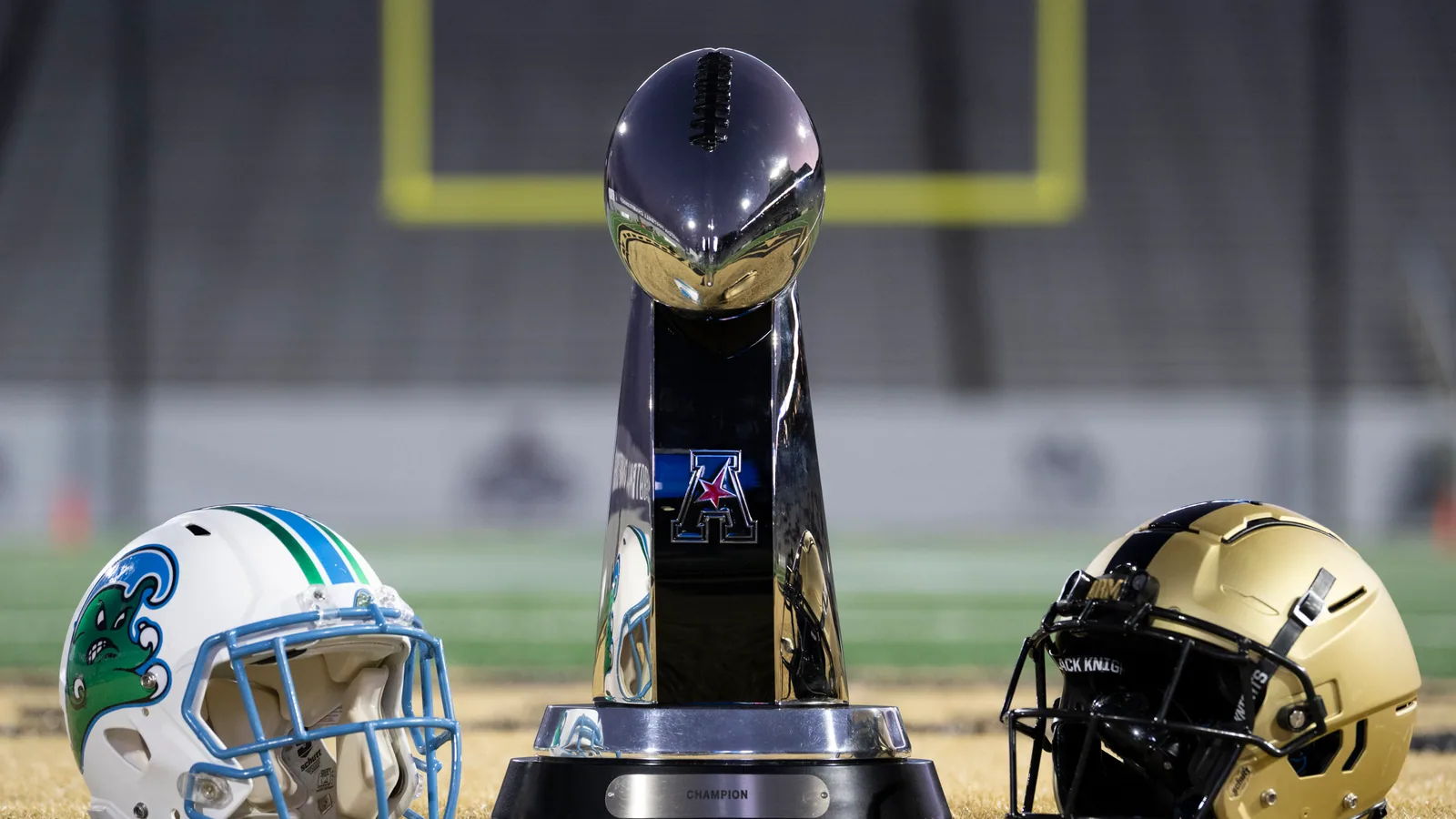
Will Hall spent Tulane's only bye week of the season reopening the quarterback competition between Kadin Semonza and true freshman Trace Johnson, and as of October 1 he had not named a starter for Saturday's American opener at Army. In the same practice window, running back Jamauri McClure pulled on a non-contact jersey and was reported on track to make his 2026 debut against Army. One of those is an unresolved problem. The other is the closest thing Tulane has to reinforcements.
Semonza earned the reopening. Against Southern Miss he had gone 12-of-23 for 129 yards with a touchdown through three quarters when Hall pulled him for Johnson with Tulane trailing 21-14, and Johnson led a drive that included a 29-yard completion to tight end Dawson Johnson before it stalled for a field goal. That followed a season of the same pattern. Zeon Chriss-Gremillion started the opener at Duke and was replaced by Semonza at halftime, and neither threw a touchdown or an interception in that game. Four games in, nobody has taken the job.
What has held the offense up is the part Hall built it around. His West Coast spread is installed around versatile running backs and tight ends, mostly one-tight-end personnel with the flexibility to shift to two, and it keeps producing on the ground no matter who is taking the snaps. Maurice Turner carried 12 times for 200 yards and two touchdowns against Southern Miss, including a 74-yard go-ahead run that began with 5:44 remaining in the fourth quarter, becoming only the second 200-yard rusher in Yulman Stadium history. Hall credited the offensive line and tight ends with creating that space and singled out Johnnie Daniels for crucial blocks, even as his tight ends had combined for four catches and 10 yards in the South Alabama win. The blocking is real. The passing game attached to it is not yet.
Turner did all that without McClure, who sat out a third straight game with a left foot injury at Kansas State. Adding Tulane's most productive returning rusher to a committee that already produced a 200-yard afternoon is the week's genuinely encouraging development, and the matchup invites it. Army arrives off a 31-29 loss at Louisiana Tech in which it allowed 503 yards and 11 plays of 10-plus yards, including a 72-yard Dylone Brooks run, with Jeff Monken saying his team "busted a couple assignments," "turned guys loose," and "didn't tackle as well as I had hoped." Whichever quarterback Hall names, Tulane can win this game without asking him to carry it.
The line gives that plan a chance. Tulane allowed three sacks against Southern Miss after six the week before at Kansas State, which is the difference between a quarterback operating on schedule and one running for his life. A repeat of that number lets Hall lean on play-action and keep a freshman, if it is Johnson, inside structure.
The harder problem is the other side. Army enters first in FBS rushing offense at 334.3 yards per game and third in time of possession at 34:58; Tulane ranks 126th in rushing defense at 191 yards allowed per game, 136th in time of possession, and has allowed a score on every opponent red-zone trip this season. Tulane's defense was shredded for 201 rushing yards at Kansas State, 152 by the quarterback alone, while surrendering 10 of 16 third downs, and Hall said afterward that "we've got to tackle better and we've got to do some things to get off the field ourselves" against "two experienced, really good, mobile quarterbacks." The Southern Miss game answered that with 3-of-14 on third down, four sacks and seven tackles for loss. Army's offense is the one that decides which of those two defenses was the real one. If Tulane keeps getting off the field on third down, the game stays short and the ground game can win it.
There is recent proof this can go Tulane's way. Jake Retzlaff threw two touchdown passes in the final two minutes to beat Army 24-17 at Yulman last October, tying it with a 12-yard strike to Bryce Bohanon and winning it on a tipped 26-yard ball to Shazz Preston with 27 seconds left, while Army held the ball for 38:58. Retzlaff's 3,168 passing yards and school-record 16 rushing touchdowns by a quarterback left with him, and no one on this roster has shown they can author that ending. Tulane needs the version of the game where it never comes to that.
Kickoff is noon Eastern on CBSSN, with Army a 3.5-point favorite. Tulane wins it 38% of the time. The conference stakes are stark. A win puts Tulane's American title-game odds near 30%. A loss drops them to about 9%. Armani Cargo was carted off in the first quarter against Southern Miss and no diagnosis has been reported, so his status is unknown.
The rest of the slate
Two games move Tulane's title-game math in smaller ways.
Charlotte at North Texas: root for Charlotte
This result carries a 4.0 percentage-point impact on Tulane's conference-title-game probability.
North Texas is a direct competitor in the American race, and a loss would knock a contender down a game. The catch is that Charlotte wins this about 2% of the time. Tulane's title-game odds land near 21% with the upset and near 17% without it, a swing of roughly 4 percentage points. Kickoff is 3:30 p.m. Eastern on ESPN+. Tulane hosts North Texas in November, so the Mean Green are a team the Green Wave will have a say about themselves.
South Florida at UTSA: root for UTSA
This result carries a 2.0 percentage-point impact on Tulane's conference-title-game probability.
This one is a real coin flip and arrives first, Thursday at 7:30 p.m. Eastern on ESPN. South Florida is the league team Tulane most needs tripped up, and UTSA wins at home about 45% of the time. A UTSA win puts Tulane near 18% for the title game against roughly 16% the other way. About 2 percentage points, and Tulane still has to go to Tampa to face South Florida in November no matter how Thursday goes.
Full probabilities and matchup detail are in the interactive guide, and the methodology explains how the numbers are built.