
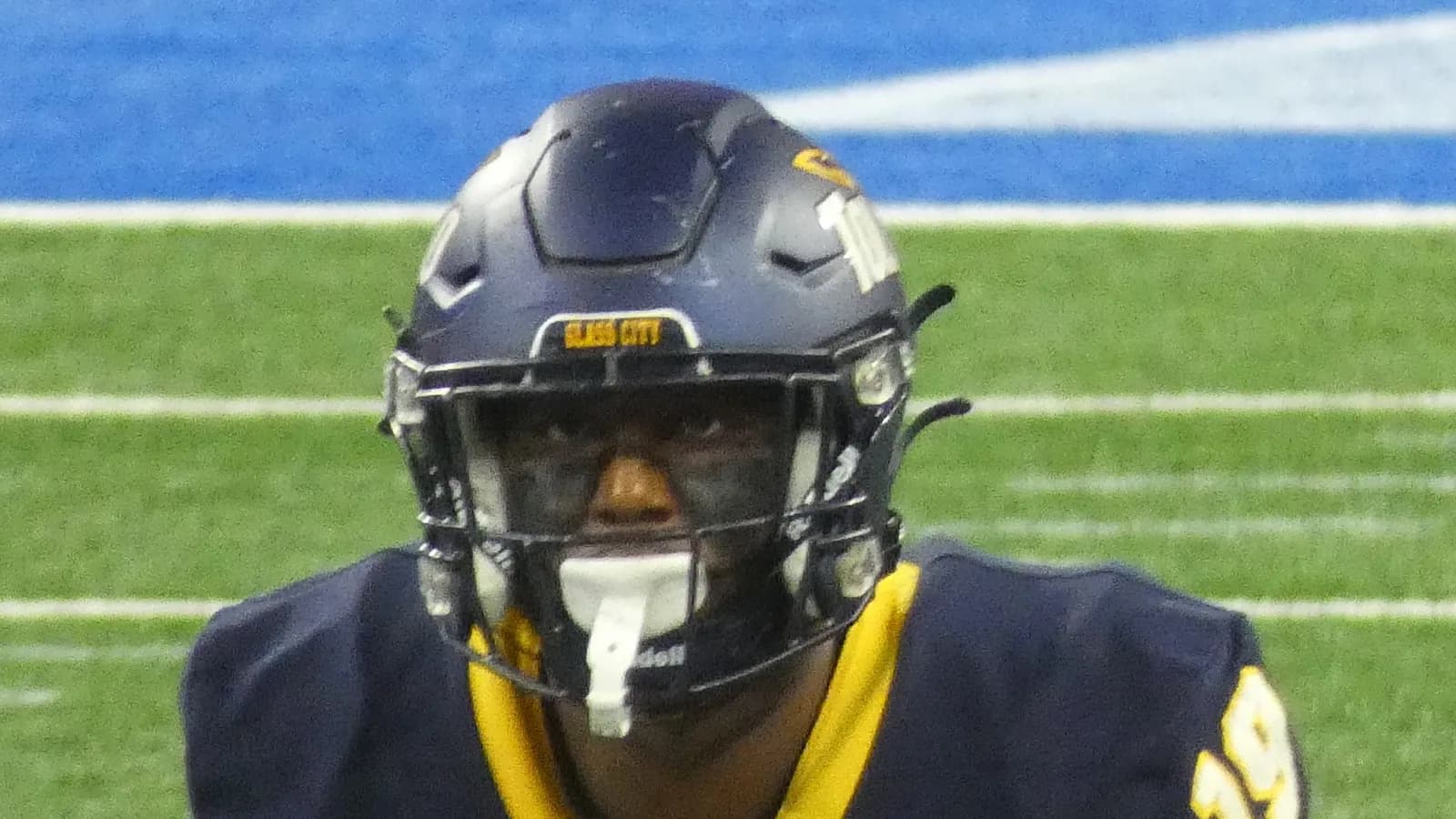
John Alan Richter hit Adjatay Dabbs for touchdowns of 60 and 6 yards, and Connor Walendzak broke a 71-yard touchdown run as Toledo erased Michigan State’s halftime lead. The Rockets briefly moved ahead in the fourth quarter, but the Spartans answered with a seven-play, 70-yard touchdown drive and then drained 5:55 before a field goal. Toledo lost 30-20.
That sequence makes Mike Jacobs’s first Glass Bowl game unusually straightforward. Toledo hosts Central Connecticut at 3:30 p.m. ET Saturday on ESPN+, and the model gives the Rockets a 99% chance to win. The suspense belongs on individual possessions. Can Richter and the offense stay on the field, and can the defense close its work without conceding another long response?
Make the easy matchup useful
The Michigan State box score reveals how little margin the explosions covered. Toledo ran only 41 plays, gained 10 first downs and converted one of eight third downs. Remove the 60-yard pass and 71-yard run, and the Rockets produced 142 yards on their other 39 snaps.
Richter finished 12 of 21 for 196 yards, two touchdowns and an interception while taking two sacks. Dabbs caught four passes for 101 yards and both scores. Their instant connection is worth enjoying, but this week should show whether it can become part of an offense that repeatedly earns another set of downs instead of waiting for the next breakaway.
Central Connecticut provides an exceptionally forgiving place to try. No. 12 South Dakota beat the Blue Devils 59-20 while gaining 594 yards at 10.4 yards per play. After an opening three-and-out, South Dakota scored on nine straight possessions, including eight consecutive touchdown drives.
So watch third-and-manageable more closely than the final margin. Sustained drives would give Richter more live repetitions in Cris Reisert’s new offense, let Dabbs contribute without having to supply the whole passing game, and keep Toledo’s rebuilt defense from absorbing another heavy workload. A handful of long touchdowns would be fun; a sequence of composed conversions would tell Toledo fans more.
Jacobs needs organization from a new team
This is Jacobs’s first home game as Toledo’s coach and the start of a three-game Glass Bowl homestand. The occasion matters because the roster he is introducing barely resembles an established unit. Toledo entered the season with 58 newcomers, 14 of them transfers from Jacobs’s former program at Mercer, and only one returning starter across offense and defense.
The transition is substantial, but it is not being led by strangers learning one another from scratch. Toledo hired the Maumee native after he went 94-23, won seven conference championships and avoided a losing season in 10 years as a head coach. Reisert is the new offensive coordinator and quarterbacks coach, Jahmal Brown is the new defensive coordinator, and seven members of Jacobs’s initial Toledo staff previously worked with him at Mercer.
That shared background should raise the expectation for orderly football even while the players are still coming together. Saturday cannot establish whether Jacobs will reproduce his lower-division success in the FBS, but it can show whether his staff is turning familiarity into clean substitutions, coherent series and an offense that functions beyond its best two plays.
Preserve the rush and finish the possession
The defensive debut contained real pieces to keep. Isaac Zay made 12 tackles and recorded a 12-yard sack, while Caden Camese and Lucas Lambert-Pipkin supplied Toledo’s other sacks. Andrew Zock added five tackles, a tackle for loss and a quarterback hurry.
Those contributions matter because the inherited standard is severe. Toledo’s 2025 defense allowed 254.3 yards and 13.3 points per game, ranking second and fourth nationally. Nobody needs the rebuilt group to duplicate that immediately. Fans should look Saturday for the more attainable combination of pressure that disrupts Central Connecticut early and enough third-down stops to end possessions before they become draining drives.
The wider MAC outlook gives those details some weight. League coaches picked Toledo third behind Western Michigan and Miami, without giving the Rockets a first-place or championship-game winner vote. The Fan Watch model is a little more bullish, placing Toledo’s conference-title-game chance at 59% and its MAC championship chance at 38%. One overwhelming nonconference matchup will barely move that picture by itself, but competent, repeatable offense would make those expectations feel better grounded after the uneven opener.
There is no useful secondary scoreboard assignment this week. The full set of modeled outcomes is available in the interactive Toledo guide, with an explanation of the simulations in the methodology. Saturday is best spent watching whether Richter turns third downs into rhythm and whether Toledo’s pass rush can hand the ball back to him without another late fade.