
TJ Thompson intercepted Landyn Locke on the first snap after halftime and returned the ball to the Sam Houston 14. Troy needed only four plays to turn that field position into a field goal. The Bearkats later answered an 87-yard Troy touchdown drive with an 85-yard touchdown drive of their own, but Troy recovered the onside kick and converted a final third-and-6 before running out the clock.
That sequence separated an encouraging opener from an encouraging win. Sam Houston lost 24-21 at Troy, leaving Huntsville with proof that Landyn Locke can run a productive passing game but no victory to show for it.
Locke completed 30 of 46 passes for a career-high 335 yards, three touchdowns and one interception. Those 30 completions reached nine receivers, the sort of distribution that makes the passing improvement feel broader than one quarterback-receiver connection. Sam Houston also gained 373 total yards and converted 6 of 14 third downs. Those are useful first signs that the offense can sustain possessions; the 21-point finish is why they remain first signs.
Tulsa will attack the weak part of the improvement
Tulsa arrives at Bowers after beating Oklahoma State 24-10 by forcing four turnovers, recording two sacks and allowing only one offensive touchdown. That makes the matchup unusually clean. Sam Houston’s most encouraging unit faces a defense that just demonstrated how quickly it can make productive offense irrelevant.
The number to care about is not whether Locke reaches 300 yards again. Watch whether he can work through a full game without giving Tulsa a short field, and whether the line gives him enough clean pockets to use all those receiving options. At Troy, Sam Houston managed only 38 net rushing yards on 24 attempts and allowed four sacks for 32 lost yards. A passing attack carrying that much of the offense cannot also absorb sacks and giveaways comfortably.
That is what would make a Sam Houston win genuinely useful. It would show that Locke’s opener can survive an opponent built to punish the exact mistakes that undercut it, not merely that he can pile up yards while playing from behind. The model gives the Bearkats a 47% chance, so this is a near-even game rather than a ceremonial home opener with a comfortable ending attached.
Tulsa also leaves an opening for Sam Houston’s defense. Baylor Hayes completed 17 of 24 passes for 227 yards and a touchdown against Oklahoma State without taking a sack, but Tulsa converted only 1 of 11 third downs. The Bearkats should want their pass rush to disturb that efficiency and keep handing the ball back to Locke.
There was real pressure at Troy. Sam Houston recorded four sacks for 22 yards and held the Trojans to 165 passing yards. Brian Bates Jr. had one of those sacks, Elijah Groves had 1.5, and Chauncey Chidi, Jarra Anderson and Mike King contributed half a sack apiece. Getting pressure from several places makes that part of the defensive repair worth carrying forward.
The rest of the front still has something to prove. Troy ran 42 times for 177 net yards, so four sacks did not amount to control of the line of scrimmage. Tulsa does not need to expose that concern with explosive runs; steady gains that keep Hayes out of obvious passing downs would be enough to blunt Sam Houston’s best defensive development.
Let Bowers amplify the test
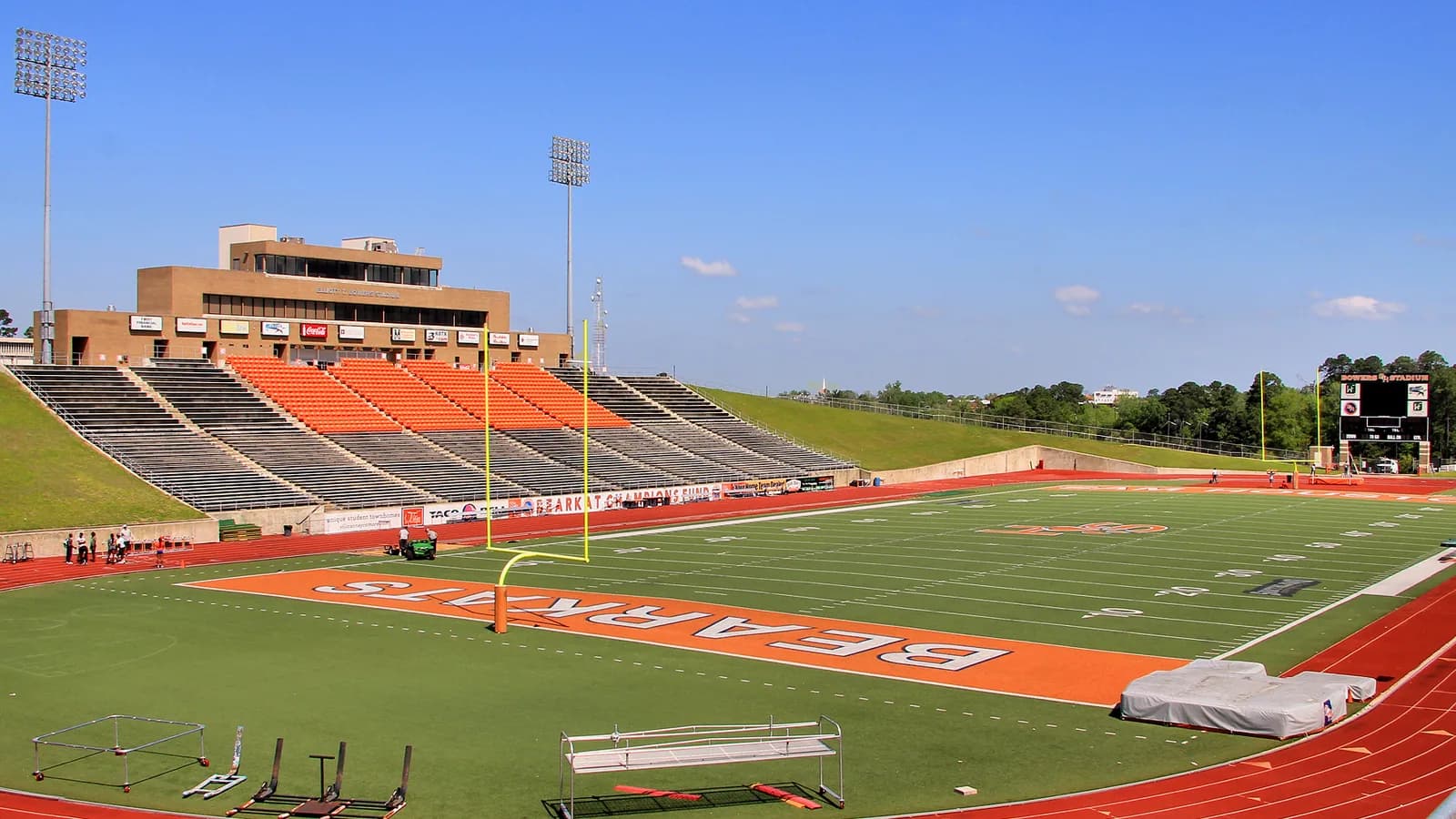
Sam Houston played its entire designated 2025 home schedule at Shell Energy Stadium during renovations. Saturday’s game is the program’s first on-campus home date since 2024, with Tulsa visiting the renovated Bowers Stadium on September 12. That gives the week emotional weight, but the building cannot answer the football questions for the Bearkats.
Kickoff is Saturday at 6 p.m. CT on ESPN+. The atmosphere deserves attention early. Tulsa just won by taking control of possessions, and Sam Houston needs a home crowd that can make third downs feel different for Hayes. Over time, several home games will tell fans whether the return to campus creates a durable advantage. This one can at least provide the first real glimpse.
Week 2 is the second of four consecutive nonconference games for both teams. Sam Houston hosts Nicholls next and then visits Texas Tech, while Tulsa will host East Texas A&M before traveling to Arkansas. There is time for either program to develop, but the shape of Sam Houston’s next two games makes Tulsa the most plausible place to earn a meaningful win before conference play.
The interactive guide provides the wider forecast, and the methodology explains how the probabilities are produced. Can Sam Houston protect Locke and the ball well enough for visible improvement to count in the standings?