
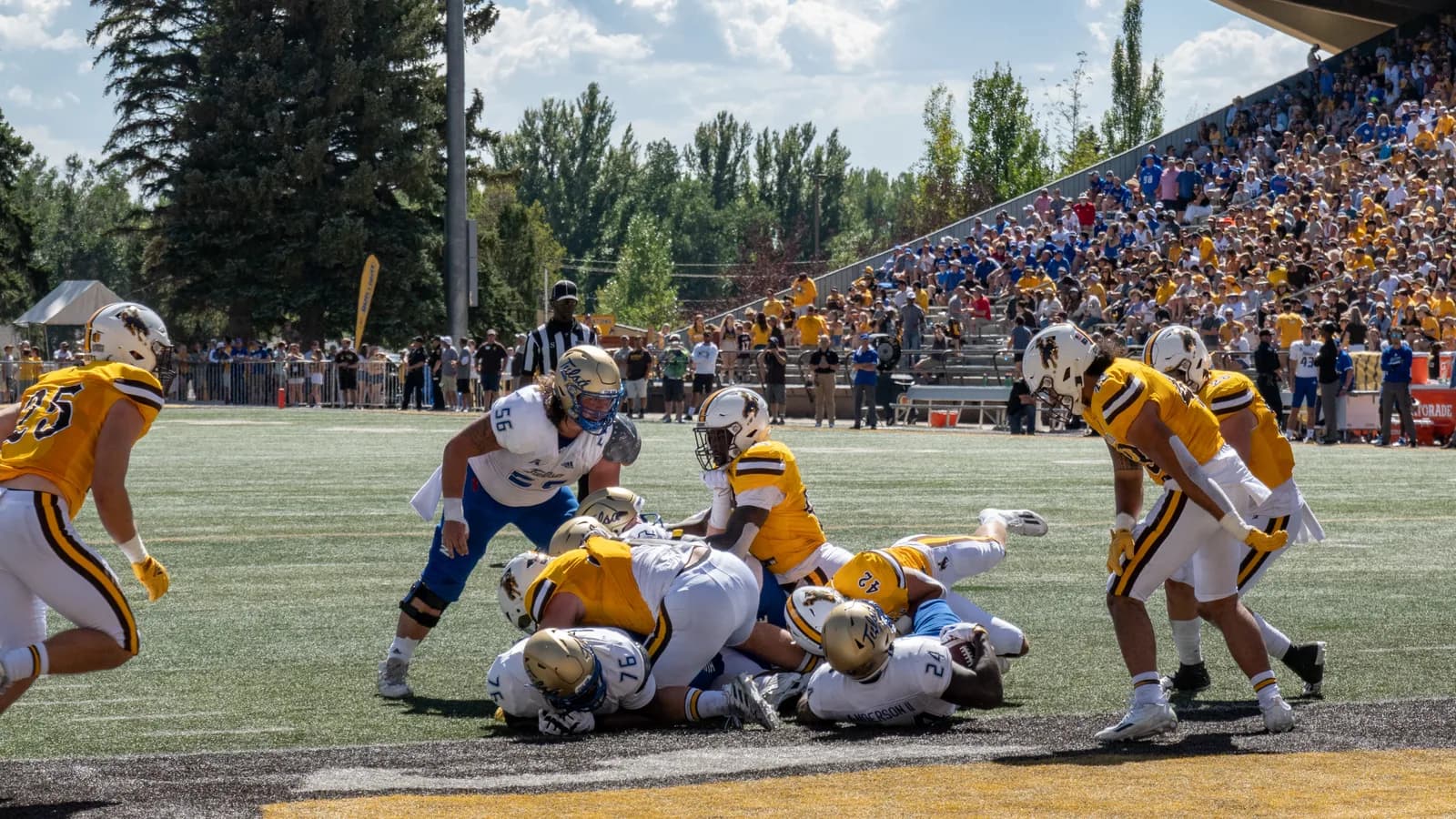
Tulsa reached the red zone 42 times last season and scored only 23 touchdowns there, the clearest number behind an offense that averaged 397.9 yards but just 23.2 points per game, according to Tulsa’s 2025 statistics. That is where this season’s first serious evaluation should begin. Not with whether the Golden Hurricane can move the ball, but with whether promising drives finally become touchdowns.
Oklahoma State visits Saturday, Sept. 5, for a 2:45 p.m. CT kickoff on ESPNU. The Fan Watch model gives Tulsa a 54% chance to win, close enough that neither confidence nor dread fits. Treat this as a real opportunity, but judge the afternoon by more than the final score.
Watch what happens when the field shrinks
New offensive coordinator Kevin Barbay inherits the yardage-to-points problem. Tulsa does not need empty movement between the 20s; it needs a better answer when space disappears and every missed block, late read or unsuccessful run becomes more expensive.
That makes red-zone possessions the highest-value viewing of the week. Hope for touchdowns, naturally, but watch how Tulsa creates them. Does Barbay produce an easy throw for Baylor Hayes? Can the offense stay ahead of the chains? Is there a dependable short-yardage option? One successful possession will not settle the question, but repeated clean finishes would be more encouraging than an impressive yardage total built mostly in the middle of the field.
Hayes supplies meaningful continuity. He previously played for Tre Lamb at East Tennessee State, then started nine games for Tulsa in 2025 and led the team with 2,158 passing yards and 12 touchdown passes, according to his Tulsa bio. He should not have to learn the head coach while learning Barbay’s offense. The useful question is whether that experience produces quicker, more decisive football near the goal line.
The missing 1,000 yards matter most near the goal line
Tulsa must replace leading rusher Dominic Richardson, who gained 1,065 yards in 2025 before signing a free-agent deal with the Dallas Cowboys, according to Tulsa Athletics. His departure makes the finishing test harder. Tulsa is trying to repair its scoring efficiency without the back who carried the largest rushing load.
So invest emotionally in evidence that the replacement plan is functional. A single long run is fun; a backfield that can turn second-and-medium into third-and-short, survive contact near the goal line and keep Hayes out of obvious passing situations would tell us more. If Tulsa again piles up yards but repeatedly settles or comes away empty, the old weakness remains regardless of how attractive the box score looks.
In Tulsa’s nearly even opener, the most revealing moments will come after the offense has already done enough to threaten. The full set of model numbers is in the interactive guide, with an explanation of the simulation at the methodology page.
A win deserves celebration. The more durable reason for hope would be seeing Tulsa reach scoring territory and look as though it knows exactly how to finish.